DragonSword Awakening open world route planning
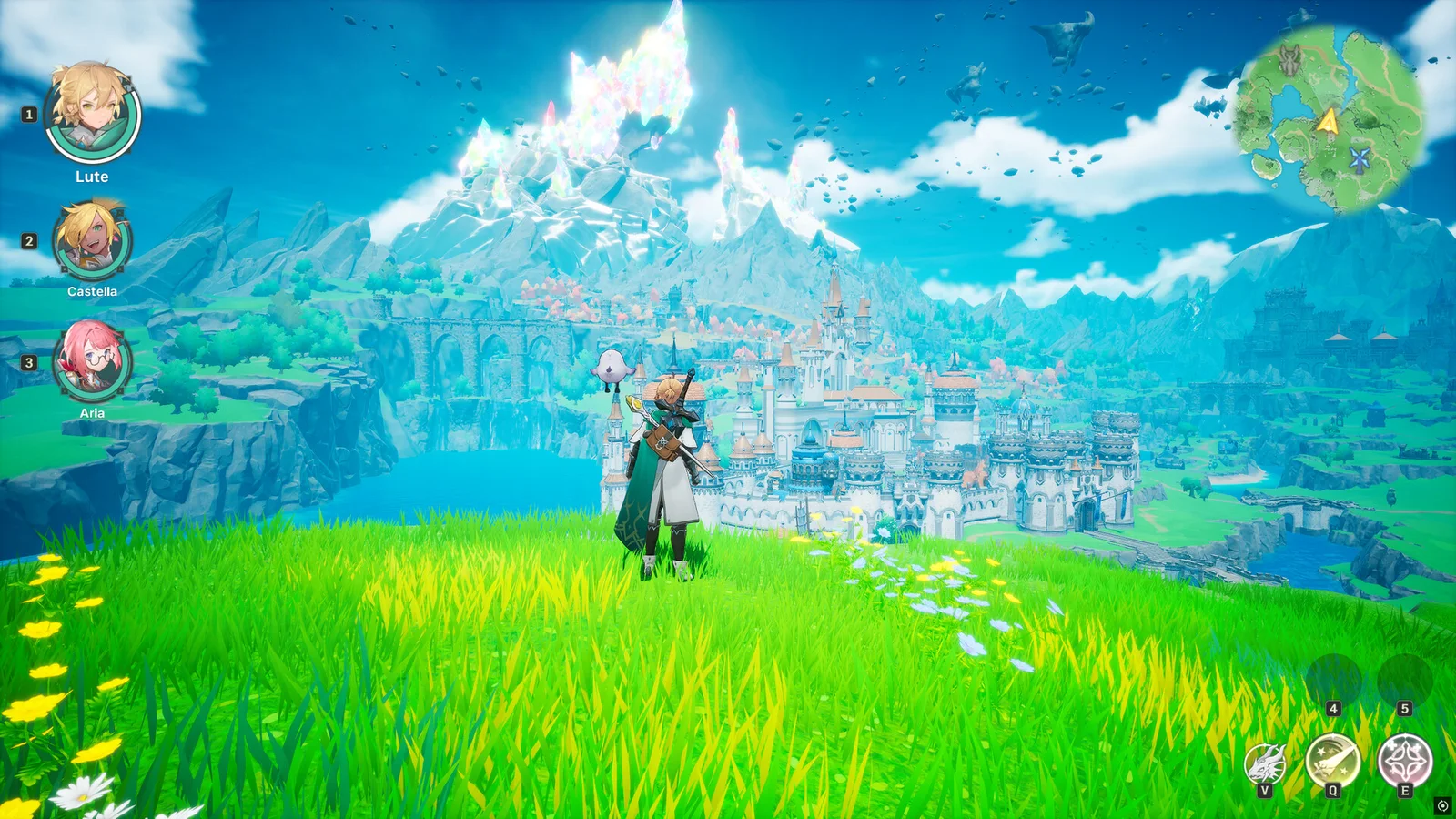
Start from the story destination and divide the surrounding space into a forward route and a return route. Complete visible activities that stay near the forward path, but mark distant caves or locked entrances for the return. The official Orbis panorama shows large elevation changes and waterways around the central kingdom, so a direct map distance can hide a longer climb or crossing.
The DragonSword Awakening open world rewards routes that end at a known service point, story objective, or safe area. This prevents a long cave or underwater detour from leaving the party without a clear next action. Revisit the map after reaching high ground; new sight lines can reveal the relationship between a tower, cellar, shoreline, and dungeon entrance.
Use the central kingdom, major towers, coastlines, and elevation changes as large anchors before recording smaller discoveries. For every detour, note both its entrance and the point where the route rejoins the story path. That two-point record is more useful than a marker with no reminder of how the party reached it.
Vertical spaces in the DragonSword Awakening open world
The official description specifically names secret cellars beneath watchtowers, treasure-filled deep seas, hidden caves, and dungeons. When a landmark appears complete from the road, check below it. A watchtower can be both a navigation marker and the roof of another space. Shorelines can continue into underwater routes rather than ending at the water's edge.
Use visual changes—masonry seams, light sources, repeated props, and enemy placement—to distinguish scenery from an entrance. If the party reaches a space that is clearly tuned above its current power, record the entrance and leave. Returning with a stronger, better-synchronized Signal team is part of efficient exploration, not a failure to clear the map.
In the DragonSword Awakening open world, altitude is part of the route description. Record whether an entrance sits below a tower, behind it, or at shoreline level, then include the nearest visible approach. This prevents a later return from ending at the correct landmark but on the wrong floor of the environment.

DragonSword Awakening open world requests and gathering
Residents provide local problems that make settlements more than shops between fights. Accept nearby requests before sweeping the surrounding area, because the same route can contain the required interaction, ingredient, enemy, or return point. Complete the request when the path naturally circles back instead of teleporting after every objective.
Ingredients deserve space because cooking is an explicit Orbis system. Gather new items at least once, note the region, and test dishes before a dungeon or boss. A meal used before demanding content produces information; a full inventory of unidentified ingredients does not.
Group the request, ingredient source, and next combat destination into one circuit. If a new ingredient appears on the outward trip, prepare or test it before entering the difficult room, then return the resident's request on the way back. That order turns the same travel time into story progress, preparation, and route knowledge. Mark the settlement as the circuit's finish before leaving it.
Bring the right three-Hero chain
A DragonSword Awakening open world team moves between open fields, tight cellars, underwater approaches, caves, and large dungeon rooms. A chain that depends on long ground travel may feel different in a confined space. Keep one reliable control or positional response available, and test whether Airborne, Freeze, or Knockdown changes the next attack's connection.
Do not swap the whole formation for every minor enemy. Use normal routes to learn one team, then change a single slot when a dungeon repeatedly exposes a range, control, or survivability problem. This makes the effect of the replacement visible and preserves the timing already learned.
Describe the travel formation by its dependable sequence rather than a tier label: opener, ailment, response, and exit. When a cellar wall or uneven shoreline disrupts the response, move the fight into clearer space before replacing a Hero. If the same failure repeats in a large room, then compare another Hero from the same ailment family.
A compact Orbis checklist
Before leaving a region, confirm the story exit, nearest resident-request return, one food preparation, and any marked cave, cellar, deep-sea point, or dungeon. The goal is not a false 100-percent number; it is a route that can be resumed without rediscovering why a marker mattered.
The second-half roadmap includes quality-of-life and combat-control updates, so route friction and map behavior may improve after launch. Keep exploration notes tied to landmarks and actions rather than fragile menu positions.
A DragonSword Awakening open world checklist should end with one explicit next action. Write “return below the west watchtower with a stronger Freeze response” instead of “tower unfinished.” The first note preserves location, direction, and team requirement; the second forces the player to rediscover all three pieces on the next visit. Clear completed notes so the remaining return routes stay readable.
- Story exit identified
- Resident request returned
- New ingredients tested
- Vertical entrances marked
- Hard content saved for a deliberate return
Questions
What activities are confirmed in the DragonSword Awakening open world?
Hound13's official overview names meadows, watchtower cellars, deep-sea treasure, caves, dungeons, cooking, resident problems, Heroes, and collectible Familiars. The useful connection is route-based: accept the nearby request, gather along the outward path, prepare before difficult content, and return through the settlement instead of treating each activity as a separate trip. Record the entrance and return action whenever a route cannot be completed immediately. Keep the next visit tied to one clear action.
Should every cave be cleared immediately?
No. Mark an entrance that is locked, too difficult, or far from the current route, then return with the right story access and a more reliable three-Hero Signal chain. Include the nearest landmark, elevation, and reason for returning in the note, so the cave can be found again without repeating the original search. Leave the region through a known story or service point rather than from the unfinished detour.